
Two of the most expensive leaks in a small apartment building never appear on a P&L as problems. They appear as normal.
Vendor creep shows up as a landscaping invoice that is slightly larger than last year’s. Vacancy bleed shows up as a unit that turned in 15 days instead of three, which nobody logs anywhere. Both are silent. Both are fixable in a single quarter.
Vendor creep is three problems under one name
A contract gets more expensive without anyone deciding it should. That happens three ways.
- Scope expansion. The vendor starts doing more than what was originally agreed, and the price follows the work.
- Auto-renewal. The contract renews at a price you never renegotiated, in a market that has since moved.
- Add-ons. Recurring charges get added quietly and are never reviewed again.
None of the three requires bad faith from the vendor. Each one is what happens when nobody on the owner’s side reads the contract next to the invoice.
The three-year test
Ask yourself one question. When did you last put your top five vendor contracts out for competitive bid?
Three or more years is the common answer, and past that mark prices have likely drifted 10 to 25 percent above market. On a landscaping, trash, and maintenance stack, that drift is not a rounding error. It is an annuity running in the wrong direction.
The useful part is that you do not have to switch anybody. You need to know the market rate, and your current vendors need to know that you know it. Most of the savings in this lever come from a renegotiation, not a replacement.
Vacancy bleed costs more per day than owners expect
Every day a unit sits vacant is a day you are not collecting rent. In most markets that is $50 to $150 per day per unit.
An owner running a slow turn process loses 8 to 14 days per vacancy against an owner working from a standardized make-ready scope. Put those two ranges together and one vacancy carries $400 to $2,100 of avoidable loss. At eight days times $50 that is $400. At 14 days times $150 it is $2,100.
Now run it across a normal year. Two or three vacancies puts the same building somewhere between $800 and $6,300 of rent it never collected. None of that appears as a line item anywhere, because uncollected rent leaves no invoice behind.
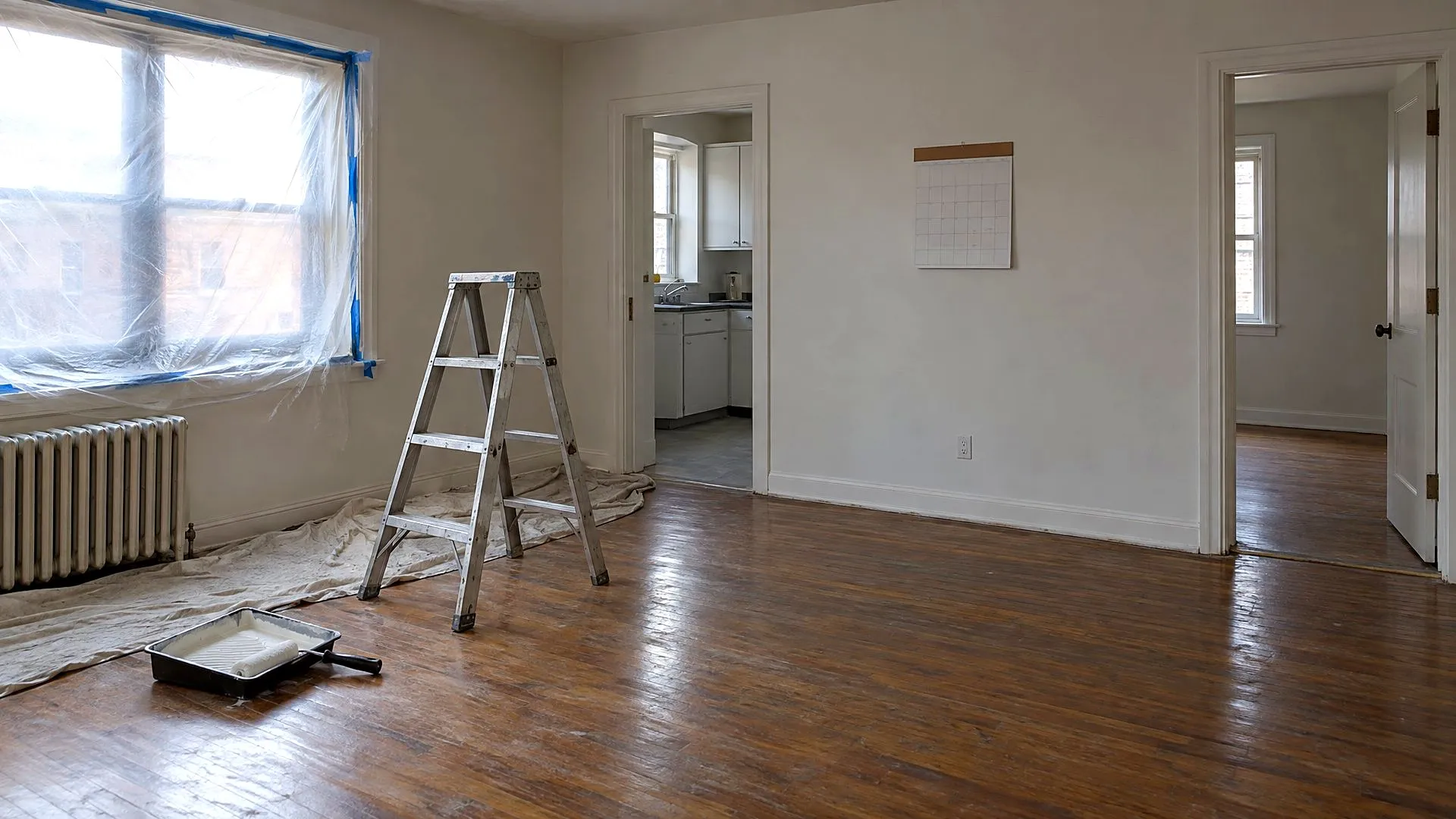
The cause is almost never the crew. It is that “ready” has never been written down, so every turn gets re-litigated: who orders the paint, who decides the carpet, who signs off, who lists the unit.
The fix on both sides
For vendors. Go out for competitive bids on your top three to five contracts. Get three quotes each. Then take the quotes back to your existing vendor and renegotiate.
For turns. Define a standard make-ready scope in writing. Set a target of three days. Track it against every turn and hold to it. A target nobody measures is a preference.
What one owner recovered
He rebid two contracts, landscaping and trash, and kept both vendors. He renegotiated using the competing quotes. Combined annual savings, $4,500.
Then he standardized his make-ready scope and cut average turnaround from 15 days to three. That is 12 days recovered per vacancy. Across three vacancies that year, it returned an additional $4,400 in rent, which works out to about $122 per day across the 36 days he took back.
Two changes, $8,900 in the same year, and not one vendor replaced or one rent raised.
Vendors and turn time are levers three and four of five. The full sequence, and where they sit relative to billing and utilities, is here: How to Increase NOI on a Small Apartment Building. To see what $8,900 of recovered NOI would do to your own building value, run the NOI Leak Check.
Own a building in Washington DC, Virginia, or Maryland? Contractor pricing and turn timelines vary enough across the three jurisdictions to change which of these two leaks costs you more: How to Increase NOI on a DC Apartment Building
Get a read on your building. Request a building audit and I will price your top contracts against the market and tell you what your current turn time is costing.
Frequently asked questions
What is vendor creep? Vendor creep is a contract getting more expensive without a decision. It happens three ways: scope expansion, where the vendor does more than was agreed, auto-renewal at a price you never renegotiated, and recurring add-on charges nobody has reviewed since year one.
How often should I rebid my vendor contracts? Put your top three to five contracts out for competitive bid every two to three years. Past three years without a bid, prices have likely drifted 10 to 25 percent above market. You do not have to switch vendors, but you do need to know the market rate.
How much does a slow unit turn cost? Every vacant day is a day of uncollected rent, which runs $50 to $150 per unit per day in most markets. A slow turn process loses 8 to 14 extra days per vacancy against a standardized make-ready scope. Across two or three vacancies a year that reaches thousands.