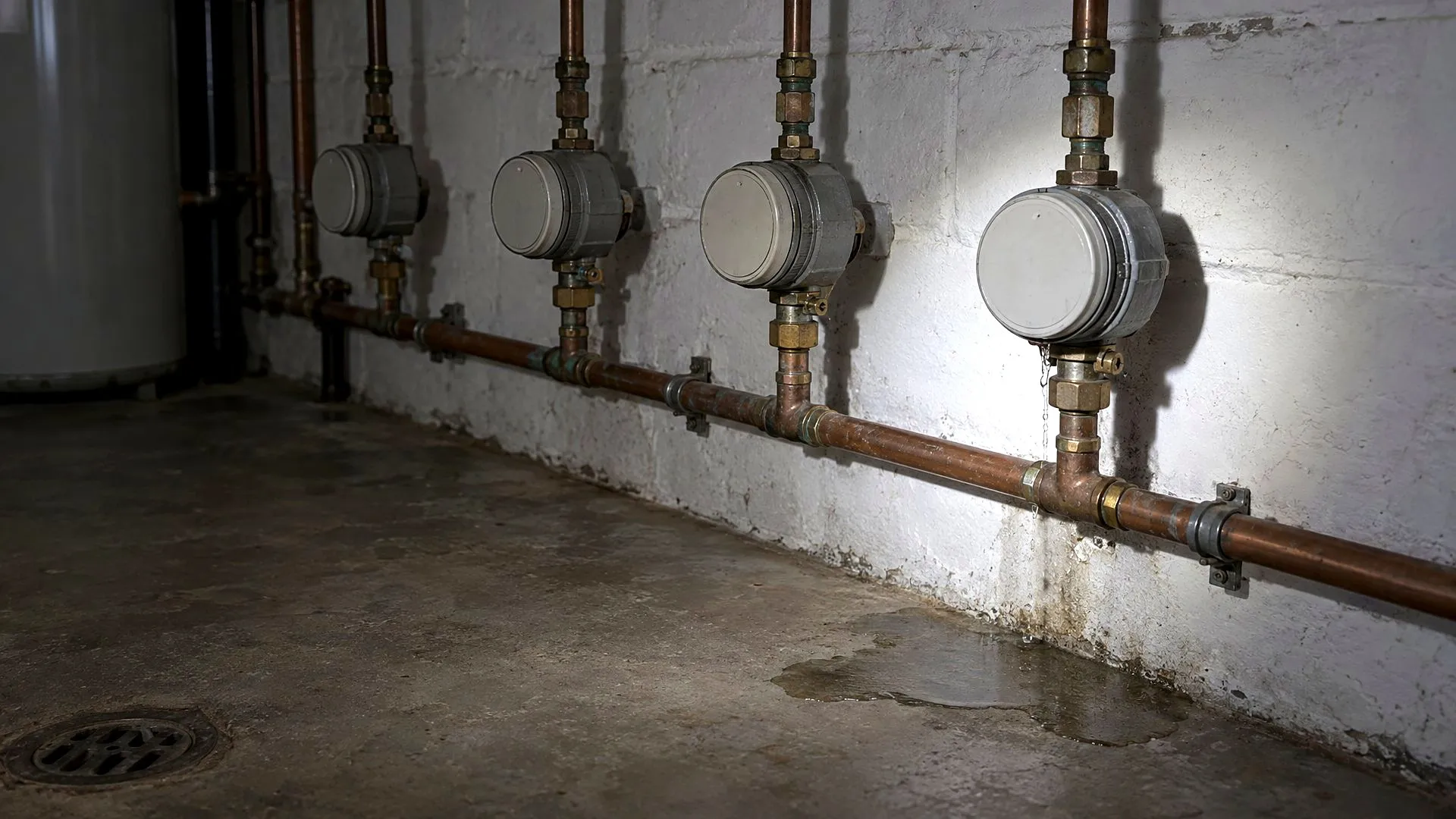

An owner watched her water bill climb for 18 months and put it down to rate increases. That is a reasonable read. It was also wrong.
When we pulled the billing history and laid the months side by side, the pattern was obvious. The increase started in one specific month and never reversed. A plumber found a supply line leak in the crawl space that had been running slowly for over a year.
Repair cost, under $500. Annual savings, just under $9,000.
Utilities hide better than any other expense
In a master-metered building you get one bill for the whole property. It goes up. You pay it.
Nothing on that bill tells you whether the increase is seasonal, structural, or a leak. There is no line item for “a toilet has been running since March.” So the bill gets paid, the expense line drifts up, and the NOI drops without any event you can point to.
A single undetected slow leak, in a toilet, a supply line, or an irrigation system, costs $6,000 to $12,000 a year. In most cases it runs for months before anyone investigates, because nothing about it ever looks urgent.
The 15 percent rule
Here is the threshold I use. If your water or sewer bill increases more than 15 percent over three consecutive months, that is almost always a leak or a billing error.
Three consecutive months is the part that does the work.
One high month is weather, a fill after a repair, or a billing cycle that ran long. Three in a row is a condition. The decisive test is whether the spike reverses, not how big it is. A spike that does not reverse is almost always a physical problem, and physical problems bill you every single day until somebody finds them.
That is why the reading has to be done on 12 months at once. A month-by-month glance at a single bill can never show you a trend line, and the trend line is the whole signal.
Two sides of the utility lever
Reduction is using less. Pull the last 12 months of water and sewer bills and look for spikes. Put consumption next to cost, because a rate increase moves cost without moving consumption, and a leak moves both. That one comparison settles most arguments in about ten minutes.
Recovery is billing the cost back where your lease and your state allow it. If your building is master-metered, you may be able to recover utility costs through a RUBS program or sub-metering. Owners are often entitled to this and have never set it up, which means they have been absorbing a tenant expense for years by default.
Reduction is faster. Recovery is bigger, and it holds.
Run the check on your own building
- Pull 12 months of water and sewer statements. Put cost and consumption in two columns.
- Mark every three-month stretch where the charge rose more than 15 percent.
- For each one, ask whether it came back down. If it did not, treat it as physical and book a plumber or a meter review.
- Check your lease language and your state rules for recovery. Confirm whether RUBS or sub-metering is available to you, and whether the recovery already in place is being applied correctly every month.
Step four is where buildings fail most often. Recovery gets set up once, then applied loosely, and the gap never shows up as an error on any report.
What that $500 repair was really worth
Just under $9,000 a year is about $750 a month that had been leaving the building.
Against a repair that cost under $500, the first year returned roughly 18 times the money spent. Eighteen times is the least important number here.
The important part is that the $9,000 is recurring. A lender counts recurring NOI at refinance and a buyer capitalizes it at sale. At a 5 percent cap rate, $9,000 a year of recovered NOI carries $180,000 in building value. At 7 percent, about $128,600. One plumber visit moved the building into a different price bracket.
Utilities are the second of five levers, and the one where I consistently find the most money the fastest. The other four sit here: How to Increase NOI on a Small Apartment Building. If you want the value math on your own numbers first, the NOI Leak Check runs it in about five minutes.
Own a building in Washington DC, Virginia, or Maryland? Local rules decide whether RUBS or sub-metering is open to you, and they are not the same across the three: How to Increase NOI on a DC Apartment Building
Get a read on your building. Request a building audit and I will read your last 12 months of utility billing and tell you whether the pattern is rates or a leak.
Frequently asked questions
How do I know if my building has a water leak? Pull the last 12 months of water and sewer bills. If the charge rose more than 15 percent across three consecutive months and never came back down, that is almost always a leak or a billing error. A seasonal swing reverses. A physical problem does not.
How much does an undetected water leak cost a year? A single slow leak in a toilet, a supply line, or an irrigation system costs $6,000 to $12,000 a year in a master-metered building. One owner traced an 18-month rise to a crawl space supply line. The repair cost under $500 and saved just under $9,000 a year.
What is the difference between utility reduction and utility recovery? Reduction means using less, which is a physical fix like repairing a leak. Recovery means billing part of the cost back to tenants through RUBS or sub-metering, where the lease and state law allow it. Reduction is faster. Recovery is larger and more permanent.